Transforming Financial Data into Strategic Narratives with Google Slides Templates
In the modern business landscape, the ability to interpret and communicate financial data is just as critical as the accuracy of the numbers themselves. For professionals, entrepreneurs, and marketers, the quarterly or annual financial report is no longer a static document filed away in a cabinet; it is a dynamic storytelling tool used to secure investment, align teams, and demonstrate market viability. This shift in communication expectations has elevated the importance of presentation design, making resources like the Financial Report - Google Slides template essential assets for contemporary workflows. As organizations move away from rigid, desktop-bound software toward agile, cloud-based collaboration, the demand for editable, aesthetically refined, and structurally sound presentation frameworks has surged.
The Evolution of Financial Communication in the Digital Age
Historically, financial reporting was the domain of accountants and analysts who prioritized data density over visual clarity. Spreadsheets were copied directly onto slides, resulting in dense, unreadable decks that failed to engage stakeholders. However, the current industry trend emphasizes "data storytelling," where complex metrics are translated into accessible narratives. This is where a specialized Financial Report - Google Slides template bridges the gap between raw analytics and strategic insight. By providing pre-designed layouts specifically tailored for financial data, these templates allow users to focus on analysis rather than formatting.
This evolution aligns with broader technological shifts toward remote work and asynchronous collaboration. Cloud-native platforms have democratized access to high-quality design, enabling freelancers and small business owners to produce materials that rival those of large corporations. The expectation from investors and clients has changed accordingly; they now anticipate polished, professional visuals regardless of the company's size. Utilizing a structured template ensures that this baseline of professionalism is met consistently, reducing the friction between data gathering and presentation delivery.
Why Visual Hierarchy Matters in Fiscal Reporting
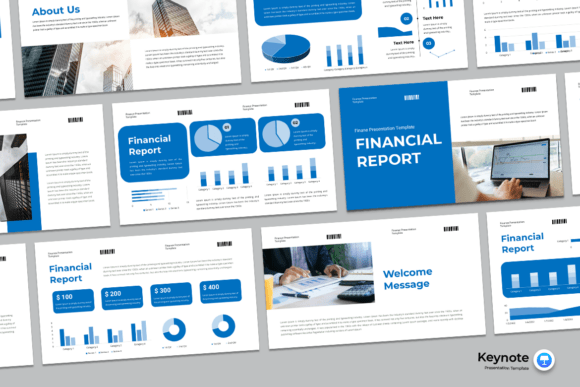
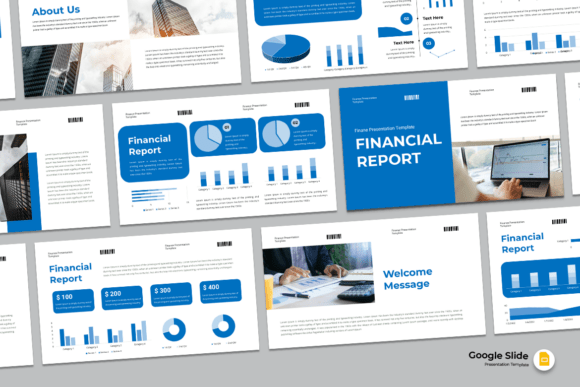
When presenting fiscal performance, cognitive load management is paramount. Stakeholders often review multiple reports in quick succession, and fatigue can lead to missed insights. A well-architected template addresses this through intentional visual hierarchy. The Financial Report - Google Slides resource typically includes master slide layouts that enforce consistency across all 15 included slides. This consistency is not merely aesthetic; it is functional. When headers, color codes, and chart placements remain uniform, the audience learns how to navigate the information intuitively, allowing them to absorb trends and anomalies faster.
Furthermore, the 16:9 aspect ratio standard reflects the reality of modern display technology. Whether presenting on a widescreen monitor during a Zoom call or projecting in a conference room, this ratio maximizes screen real estate without distortion. For creators and marketers adapting financial content for digital consumption, this format ensures compatibility across devices. The inclusion of image placeholders and drag-and-drop photo replacement features further enhances this adaptability, allowing teams to swap generic stock imagery for authentic team photos or product shots that reinforce brand identity alongside fiscal transparency.
Customization as a Workflow Accelerator
One of the most significant pain points in traditional presentation design is the time spent adjusting individual elements. Changing a brand color scheme across fifty slides manually is inefficient and prone to error. Modern templates address this through fully editable global elements. With the Financial Report - Google Slides package, users can modify colors, text styles, and shapes globally via the master slide. This capability transforms what was once a days-long design task into a matter of minutes.
For agencies and consultants managing multiple clients, this efficiency is a competitive advantage. The ability to rapidly re-skin a financial deck to match different client brand guidelines allows for higher throughput without sacrificing quality. Moreover, the use of free fonts included in the package eliminates licensing headaches and compatibility issues when sharing files across different organizations. This practical consideration underscores a deeper understanding of user needs: professionals require tools that integrate seamlessly into existing ecosystems without creating new administrative burdens.
Aligning Design with Broader Business Trends
The relevance of dedicated financial presentation templates extends beyond mere convenience; it intersects with several macro-trends shaping the future of work and commerce.
- The Rise of the Solopreneur and Freelancer: As the gig economy matures, independent professionals are increasingly responsible for their own investor relations and client reporting. These individuals rarely have dedicated design departments. High-quality templates serve as an equalizer, allowing solo practitioners to present with the same polish as established firms.
- Agile Decision Making: Business cycles have accelerated. Annual planning is often supplemented by quarterly or even monthly pivots. Static PDF reports cannot keep pace with this agility. Editable Google Slides allow for real-time updates during live strategy sessions, turning the financial report into a living document rather than a historical artifact.
- Visual Literacy in Finance: There is a growing recognition that financial literacy includes visual literacy. Stakeholders expect charts and graphs that are not only accurate but also designed to highlight specific takeaways. Pre-built unique custom slides within these templates often incorporate best practices in data visualization, guiding users toward clearer communication.
- Remote Presentation Dynamics: Virtual presentations lack the physical cues of a boardroom. Visual engagement must carry more weight to maintain attention. Professional templates provide the visual anchor necessary to keep remote audiences focused on the narrative arc of the financial data.
Practical Applications Across Industries
While the name suggests a narrow focus, the utility of a Financial Report - Google Slides template spans diverse sectors. In the startup ecosystem, founders use these decks to structure pitch supplements, breaking down burn rates and runway projections with clarity that builds investor trust. For non-profit organizations, transparency is currency; using professional layouts to present fund allocation and budget utilization demonstrates stewardship and accountability to donors.
In corporate marketing departments, these templates facilitate the alignment of creative spend with ROI. Marketers can overlay campaign performance metrics against budget forecasts, using the consistent styling to draw direct correlations between investment and outcome. Even in educational settings, business professors and students utilize these resources to simulate real-world reporting environments, bridging the gap between academic theory and professional practice. The versatility stems from the template’s foundational design principles: clarity, modularity, and professionalism are universal requirements for effective communication.
Navigating Technical Specifications and Assets
Understanding the technical parameters of these resources helps users maximize their value. The PPTX 16:9 format ensures broad compatibility, allowing users to edit in PowerPoint if necessary while maintaining the integrity of the layout. However, it is crucial to note that important images are not included. This distinction is actually a feature rather than a limitation; it prevents legal complications regarding stock photography licensing and encourages users to insert relevant, proprietary visuals. This requirement reinforces the principle that a template is a framework, not a finished product. The true value emerges when the user injects their unique context, data, and imagery into the provided structure.
Additionally, the inclusion of 15 distinct slides per template offers sufficient variety to cover comprehensive reporting needs without overwhelming the user with unused options. From executive summaries and balance sheets to SWOT analyses and timeline projections, the curated selection mirrors the actual flow of a professional financial narrative. This curation saves users from the paralysis of choice, providing a proven sequence that guides the audience logically through the information.
Future-Proofing Your Reporting Strategy
As we look toward the future of business communication, the integration of AI and automated data feeds will likely change how we populate slides. However, the need for human-curated narrative structures will persist. Automation can generate charts, but it cannot determine which chart matters most to a specific audience at a specific moment. Templates like the Financial Report - Google Slides represent the enduring human element of presentation design: the deliberate arrangement of information to persuade, inform, and inspire.
Professionals who adopt these tools are not simply saving time; they are investing in a scalable communication infrastructure. By standardizing the visual language of their financial reporting, they build institutional memory and brand equity. Every report becomes a reinforcement of the organization’s identity and competence. In an era defined by information overload, the ability to present financial data with precision and elegance is a distinctive skill. Leveraging expertly crafted templates allows teams to cultivate this skill efficiently, ensuring that their financial stories are heard, understood, and acted upon.
Ultimately, the transition from spreadsheet to story is a strategic imperative. Whether you are a freelancer pitching a retainer, a CEO updating the board, or a marketer justifying ad spend, the medium of your message shapes its reception. By utilizing robust, editable, and professionally designed resources, you ensure that your financial narrative receives the attention and respect it deserves. Visit our profile to explore this and other presentation templates designed to meet the evolving demands of modern professionals, and transform your next financial report from a routine obligation into a compelling strategic asset.