INDIE Small Business Thank You Card: Elevating Customer Connections with Digital Templates
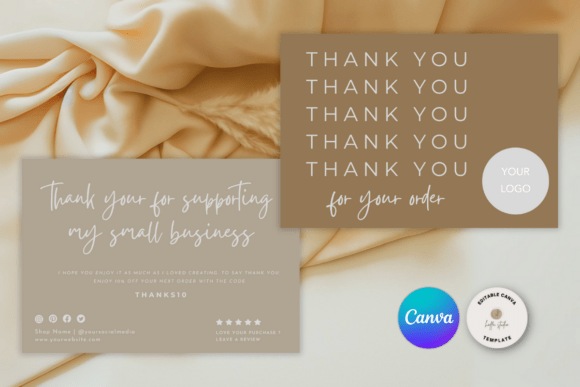
In the evolving landscape of independent commerce, the unboxing experience has become as significant as the product itself. For creators, makers, and small business owners, an INDIE Small Business Thank You Card serves as a tangible bridge between a digital transaction and a physical relationship. However, the logistics of designing, ordering, and storing printed stationery can often hinder rather than help agile businesses. This is where the shift toward high-quality digital assets transforms workflow efficiency. By utilizing a customizable Canva template, entrepreneurs can maintain brand consistency and personal touch without the overhead of traditional print procurement.
It is crucial to understand immediately that this is a digital item. No printed item will be shipped to your home. Instead, you are acquiring the creative infrastructure to produce professional-grade stationery on demand. This model aligns perfectly with modern lean business practices, allowing for instant updates, seasonal variations, and cost-effective branding that scales with your growth.
The Shift Toward On-Demand Brand Assets
The traditional route for business stationery involved hiring a graphic designer, waiting for proofs, committing to minimum print runs of 500 or more units, and storing excess inventory. For an indie business testing new products or rebranding frequently, this approach is both capital-intensive and inflexible. The current market preference leans heavily toward agility. Business owners now expect tools that integrate seamlessly into their existing digital ecosystems.
This template was made by Canva specifically to address these friction points. There is no need to download specialized software like Adobe Illustrator or Photoshop, which often carry steep learning curves and expensive subscription fees. Because it operates on a simple, easy-to-use platform accessible via preferred browsers like Chrome or Edge, the barrier to entry for professional design is effectively removed. This accessibility ensures that your thank you cards remain a dynamic part of your marketing strategy rather than an afterthought buried in administrative tasks.
Customization Capabilities for Authentic Branding
Authenticity is the currency of the indie business world. Customers purchase from small shops because they want a connection that mass-market retailers cannot provide. A generic "thank you" card undermines this value proposition. This digital template empowers you to infuse every square inch of the card with your unique identity.
What you can do with this asset extends far beyond filling in a name field. Full creative control is built into the file structure:
- Typography Control: Text font, color, and size can be changed to match your specific brand guidelines. Whether your aesthetic is minimalist sans-serif or ornate calligraphy, the template adapts to you.
- Visual Identity Integration: You can import your logo, clip art, or original photography. Supporting JPG, PNG, and SVG formats ensures that your branding elements remain crisp and professional regardless of how you choose to layout the card.
- Scalable Product Lines: If you sell multiple collections or offer tiered services, uniformity matters. You can create a cohesive product line by clicking the “duplicate page” button located above the artboard. This feature allows you to maintain consistent margins and alignment while swapping out messaging or imagery for different customer segments.
This level of granularity ensures that the final printed piece feels bespoke. It signals to the recipient that care was taken at every stage of their journey, reinforcing the premium nature of indie goods.
Technical Workflow and Accessibility
Understanding the technical delivery and usage of this asset is vital for a smooth user experience. After you purchase this template, you will receive a .zip file containing a PDF with the access links. This delivery method is instantaneous, eliminating shipping delays and allowing you to begin customization moments after checkout.
Inside, you will find a 5″ x 3.5″ high-quality template. This dimension is the industry standard for postcards and thank you notes, optimized for postal rates and envelope compatibility. All you need is a free Canva account and basic knowledge of the platform to get started. There is no expiration or download limit on the template link. This permanence is a significant advantage over physical stock; if you lose a file or need to redesign six months later, the master template remains available in your library indefinitely.
Strategic Printing Options
Because this is a digital-first solution, you retain complete autonomy over production. How to print your files depends entirely on your current volume needs and budget. This flexibility supports businesses at every stage of development.
- Home Printing: For micro-batches, prototypes, or ultra-personalized notes, printing at home on quality cardstock is viable. This is ideal for sellers who hand-write messages and only ship a few orders per week.
- Local Print Shops: Stores like Staples or Office Depot offer same-day service for medium-sized runs. This bridges the gap between DIY and industrial printing, offering better paper quality and finish options without long lead times.
- Online Professional Services: For established brands with consistent order volumes, services like Vistaprint or specialized boutique printers can handle bulk orders with premium finishes like matte coating, spot UV, or recycled textures.
By decoupling the design phase from the printing phase, you avoid being locked into a single vendor. You can test different paper weights and finishes to see what resonates best with your audience without redesigning the card each time.
Enhancing the Post-Purchase Experience
The relevance of the INDIE Small Business Thank You Card extends beyond mere politeness; it is a strategic retention tool. In an era dominated by algorithmic advertising and automated emails, a physical insert creates a sensory memory anchor. When a customer receives a package, the thank you card is often the first branded element they interact with after opening the mailer.
Modern consumers, particularly those aged 20–50, value transparency and human connection. They are accustomed to digital interactions but crave analog validation. A well-designed card validates their decision to support a small business over a corporate giant. Furthermore, because this template allows for rapid iteration, you can use these cards to drive specific behaviors. Need to boost reviews? Add a QR code linking to your feedback page. Launching a new collection next month? Tease it on the back of the card. Offering a referral discount? Include a personalized code.
The ability to update these elements digitally means your packaging collateral never becomes obsolete. Unlike pre-printed boxes or bags that might sit unused for years if your messaging changes, a digital template evolves in real-time alongside your business strategy.
Sustainability and Waste Reduction
An often-overlooked benefit of digital templates is sustainability. Traditional printing requires forecasting demand, which inevitably leads to waste when businesses pivot or rebrand. Unused stationery ends up in landfills. By adopting a print-on-demand mindset facilitated by this Canva template, you only produce what you actually need. This aligns with the values of many indie consumers who prioritize eco-conscious business practices. Reducing physical waste in your operations not only lowers costs but also strengthens your brand narrative as a responsible, forward-thinking creator.
Practical Considerations for Implementation
While the platform is user-friendly, maximizing the value of this INDIE Small Business Thank You Card requires intentional design choices. When customizing text fonts and colors, ensure sufficient contrast for readability. Remember that lighting conditions during unboxing vary; low-contrast designs that look elegant on a backlit screen may become illegible in dim indoor lighting.
When importing logos or images in JPG, PNG, or SVG formats, always verify resolution before printing. While the template is high quality, pixelated source files will result in unprofessional output. Vector files (SVG) are generally preferred for logos as they scale infinitely without degradation. For photographs, aim for 300 DPI at the final print size to ensure sharpness.
Finally, consider the tactile experience. Since you control the printing, experiment with paper texture. A matte finish often conveys a more organic, indie feel compared to high-gloss commercial stocks. Uncoated papers accept handwriting better, which adds a layer of personalization that digital communication cannot replicate. The template provides the visual foundation, but your choice of substrate completes the message.
Ultimately, this digital asset represents a shift in how small businesses manage their brand touchpoints. It replaces rigidity with fluidity, expense with efficiency, and guesswork with control. By leveraging a tool designed for the modern creator economy, you ensure that every package leaving your workspace carries the full weight of your brand’s story, perfectly tailored to the moment.