Evaluating the Professional Medical 8 Page Brochure Design Template for Healthcare Marketing
In the healthcare sector, printed collateral serves a distinct function that digital media often cannot replicate. Patients and stakeholders frequently require tangible information they can review at their own pace, away from screens. The Professional Medical 8 Page Brochure Design template addresses this specific need by providing a structured, editable EPS framework tailored for hospitals, clinics, and private practices. Rather than starting from a blank canvas, marketing professionals and clinic administrators can leverage this pre-structured asset to produce high-quality informational booklets efficiently. This resource is particularly relevant for organizations that need to maintain strict brand consistency while communicating complex medical services, facility overviews, or patient care guides.
Structural Integrity and Content Hierarchy
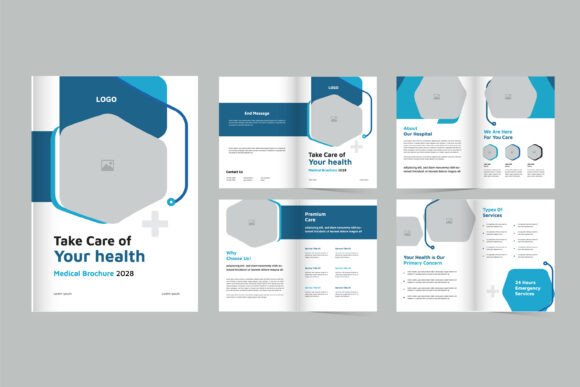
The primary value of an 8-page brochure template lies in its imposed grid system. Unlike a standard flyer or bi-fold, an eight-page format allows for a narrative flow similar to a magazine or annual report. This specific design utilizes a layered EPS structure that separates background elements, typography, and imagery. This separation is critical for professional workflows. It ensures that when a designer adjusts the color palette to match hospital branding, the text hierarchy remains intact and legible.
The layout typically follows a logical progression essential for medical communication:
- Cover Page: High-impact imagery with clear institutional identification and a primary value proposition.
- Introduction/Mission: Establishing trust through leadership messages or organizational history.
- Service Breakdown: Dedicated spreads for specific departments (e.g., Cardiology, Pediatrics, Orthopedics) utilizing consistent iconography and spacing.
- Facility Highlights: Visual tours of technology, labs, or patient rooms to reduce anxiety and demonstrate capability.
- Physician Profiles: Standardized grids for headshots and credentials, ensuring no single provider appears more prominent than another due to formatting errors.
- Patient Resources: Insurance information, visiting hours, and contact details placed consistently for easy reference.
This pre-defined hierarchy reduces the cognitive load on both the designer and the reader. For healthcare providers, where clarity can directly impact patient outcomes and satisfaction, having a template that enforces readable margins and appropriate white space is a significant operational advantage.
Technical Specifications and Editability
The technical foundation of this asset is the Encapsulated PostScript (EPS) format. While newer formats like AI or INDD are common, EPS remains a universal standard for vector graphics. This compatibility means the Professional Medical 8 Page Brochure Design can be opened in Adobe Illustrator, CorelDRAW, Affinity Designer, and even some open-source vector tools. For freelancers or small agencies working with diverse client software stacks, this versatility prevents file corruption issues during handoffs.
A notable specification is the inclusion of free fonts. Licensing commercial typefaces for print projects can introduce unexpected costs and legal complexities. By utilizing open-source or free-for-commercial-use typography, this template eliminates a significant barrier to entry. However, users should verify the specific font licenses included in the download package before mass printing to ensure compliance. The text layers are typically organized into character and paragraph styles, allowing for global changes. If a clinic needs to increase body copy size for elderly demographics, a style update propagates across all eight pages instantly, maintaining visual rhythm without manual reformatting.
Layer Management and Workflow Efficiency
Professional templates distinguish themselves through rigorous layer organization. In this healthcare-specific design, layers are generally grouped by function: Backgrounds, Text, Images, and Decorative Elements. This structure supports non-destructive editing. A marketer can toggle off decorative elements to create a cleaner, ink-saving version for internal drafts, or lock text layers while swapping out photography. For teams with multiple contributors, such as a hospital communications department where nurses might provide content updates, locked layers prevent accidental layout shifts that could compromise HIPAA-compliant disclaimers or regulatory text.
Practical Applications in Healthcare Settings
The utility of the Professional Medical 8 Page Brochure Des extends beyond general marketing. Its depth makes it suitable for several specialized use cases within the medical field:
- New Patient Welcome Kits: Providing comprehensive orientation materials that explain facility navigation, billing procedures, and care philosophies in a single, cohesive document.
- Departmental Service Guides: Creating detailed explanations of surgical procedures or treatment plans where a simple brochure lacks sufficient space for necessary nuance and reassurance.
- Corporate Partnerships and B2B: Presenting facility capabilities to insurance networks, corporate wellness partners, or referring physicians who require detailed technical specifications and accreditation data.
- Recruitment Materials: Showcasing workplace culture, benefits, and career pathways to prospective medical staff during job fairs or campus recruiting events.
In each scenario, the 8-page format provides enough real estate to be authoritative without becoming overwhelming. It strikes a balance between the brevity of a tri-fold and the density of a full catalog.
Assessing Quality and Limitations
While this template offers substantial advantages, objective evaluation requires acknowledging its constraints. As a vector-based EPS, it handles illustrations, charts, and typography exceptionally well. However, EPS files can sometimes struggle with high-resolution raster images compared to native InDesign files. Users planning to include extensive MRI scans or high-detail facility photography should test image linking and export settings early in the process to avoid pixelation or file bloat.
Additionally, the "free font" aspect, while cost-effective, may limit typographic distinctiveness. Many healthcare organizations invest heavily in custom typography to differentiate their brand. Users relying solely on the included fonts may produce materials that look generic or identical to other clinics using the same template. To mitigate this, professionals should consider substituting the header fonts with licensed brand assets while retaining the free body fonts for readability and ease of editing.
Another consideration is print readiness. Not all downloadable templates include proper bleed, trim marks, or CMYK color profiles. Before sending the Professional Medical 8 Page Brochure Design to a commercial printer, verify that the artboard includes the standard 0.125-inch bleed and that colors are converted from RGB to CMYK. Medical brochures often use specific spot colors (Pantone) for brand accuracy; checking whether the template supports spot color channels is essential for institutions with strict visual identity guidelines.
Strategic Value for Diverse Stakeholders
Different user groups will derive varying levels of value from this asset. Understanding these distinctions helps determine if it fits your current project scope.
For Freelance Designers and Agencies: This template acts as a force multiplier. It reduces billable hours spent on grid setup and master page creation, allowing more time for custom illustration or strategic consulting. It is particularly valuable for pro-bono work or low-budget clinic clients who need professional results but cannot afford bespoke design fees.
For Hospital Marketing Directors: The template serves as a baseline for vendor deliverables. Even if you hire an external agency, providing this template as a starting point ensures they adhere to your preferred information architecture. It also functions as an emergency backup; if a vendor misses a deadline, internal staff can quickly update the EPS file to meet urgent print needs.
For Small Practice Owners: For solo practitioners or small group practices, hiring a designer for an 8-page booklet may be cost-prohibitive. This template democratizes access to professional-grade collateral. With basic vector software skills, a practice manager can produce materials that rival larger health systems, helping to level the playing field in local market perception.
Making the Final Determination
The Professional Medical 8 Page Brochure Design Hospital, Clinic Healthcare template represents a pragmatic solution for healthcare communication. Its strength lies not in artistic novelty, but in functional reliability and structural soundness. It solves the specific problem of organizing dense medical information into a digestible, trustworthy format. For professionals who understand its technical parameters and are willing to customize beyond the default state, it offers significant return on investment in terms of time saved and output quality.
However, it should be viewed as a foundation rather than a finished product. The most effective medical brochures combine solid structure with authentic imagery and verified, empathetic content. Use this template to handle the heavy lifting of layout and typography, but ensure the final output reflects the unique voice and standards of your specific healthcare organization. When applied with professional judgment, this resource effectively bridges the gap between clinical necessity and marketing excellence, supporting better-informed patients and stronger institutional relationships.