Pack My Bag Fishing T-Shirt: Integrating High-Resolution Design Assets into Creative and Commercial Workflows
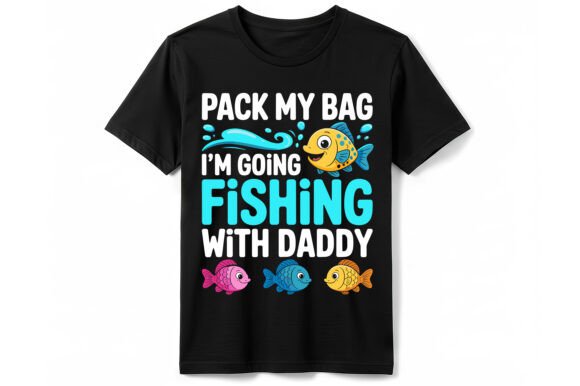
The Pack My Bag Fishing T-Shirt design represents more than just a cheerful graphic for children’s apparel; it serves as a versatile digital asset within broader creative, educational, and commercial workflows. For professionals ranging from print-on-demand entrepreneurs to educators and content creators, this specific design package functions as a foundational element in project execution. The inclusion of high-resolution PNG, EPS, SVG, and JPG files at 4500×5400 pixels and 300 DPI ensures that the asset is not merely an image, but a production-ready component capable of scaling across multiple mediums without quality degradation. Understanding how to leverage these technical specifications is essential for maintaining efficiency and consistency in any visual project.
Technical Specifications and Asset Management
Before integrating the Pack My Bag Fishing T-Shirt design into a production line or lesson plan, proper asset management is critical. The provided file suite addresses distinct stages of the creative process. The 300 DPI regulation is the industry standard for physical printing, ensuring that the vibrant colors and playful underwater scene remain crisp on fabric, mugs, or stickers. For digital workflows, the RGB color profile facilitates immediate use in web-based mockups, social media content, or digital learning materials without requiring complex color space conversion.
Organization begins immediately after download. Professionals should establish a standardized folder structure that separates source files (EPS/SVG) from raster outputs (PNG/JPG). The transparent background PNGs are particularly valuable for rapid prototyping, allowing designers to test the "fishing with daddy" motif against various garment colors—such as turquoise, black, or bright yellow—without spending time on manual masking. This pre-cleared transparency streamlines the decision-making phase, enabling faster approval cycles for client projects or personal product lines.
Pre-Production Planning and Compatibility Checks
In the planning phase of any merchandise or educational project, compatibility determines feasibility. The vector-based EPS and SVG files included with this design offer infinite scalability, which is vital when adapting a single concept for disparate products. A designer creating a coordinated family fishing collection can resize the artwork for a toddler’s shirt, an adult mug, and a tote bag simultaneously while maintaining identical line weight and color fidelity. This eliminates the need to recreate or trace elements, significantly reducing labor hours.
For educators and bloggers focusing on outdoor themes, the hand-drawn font and cartoon fish elements serve as modular components. During the planning stage, consider how these individual layers interact with existing brand guidelines or curriculum aesthetics. Because the files are separated and high-resolution, they can be deconstructed. A teacher might use only the water droplets and bright yellow fish for a worksheet header, while a marketer uses the full composition for a summer campaign banner. Assessing these modular applications before production prevents scope creep and ensures the asset aligns with specific project goals.
Execution Across Physical and Digital Mediums
The execution phase varies significantly depending on the end goal, yet the core asset remains constant. For apparel manufacturing, the 4500×5400 dimension provides ample bleed area and detail retention for direct-to-garment (DTG) or screen printing. When placing the kids fishing t-shirt design on dark fabrics like black cotton, utilizing the opaque white underbase layer inherent in high-quality PNG exports ensures the vibrant colors pop as intended. This technical attention to detail during the printing setup phase directly correlates to the final product's perceived value.
In digital environments, such as e-commerce listings or educational blogs, the same high-resolution source allows for pixel-perfect zooming and cropping. Marketers can extract close-ups of the playful underwater scene to create texture backgrounds or secondary graphics for "fishing adventure" themed posts. The consistency between the physical product photo and the digital listing graphic builds trust with consumers. For creators making printable cards or stickers, the 300 DPI specification guarantees that home or office printers produce results comparable to professional services, bridging the gap between DIY crafting and commercial retail.
Post-Production Quality Control and Iteration
Quality control extends beyond the initial print run. Maintaining a master library of the original EPS and SVG files allows for future iterations without starting from scratch. If a business owner decides to update their "fun kids apparel" line next season, they can recolor the vector elements to match new trends while retaining the recognizable "Pack My Bag" typography. This long-term usability transforms a one-time purchase into a sustainable design system.
For educators and parents using the design for learning activities, post-project reflection involves assessing engagement. Did the bright colors and relatable "fishing with daddy" theme resonate with the target age group? Because the asset is editable in vector format, feedback can be acted upon immediately. Perhaps the text needs to be larger for early readers, or the fish species should be localized to a specific region. Having access to the source files empowers users to refine the resource based on real-world outcomes rather than accepting static limitations.
Strategic Integration for Diverse User Groups
Different professionals integrate this asset into unique ecosystems. Small business owners operating on platforms like Etsy or Amazon Merch rely on the immediate availability of print-ready files to reduce time-to-market. The transparent backgrounds and correct sizing mean less time in Photoshop and more time optimizing SEO tags like "children s fishing shirt" or "summer kids tee." Efficiency in file preparation directly impacts profitability and inventory turnover.
Conversely, educators and homeschoolers integrate the design into thematic units about nature, family bonding, or outdoor safety. Here, the workflow focuses on accessibility and adaptation. The ability to print high-quality visuals supports diverse learning styles, while the digital files allow for integration into interactive slideshows or virtual field trip materials. The cheerful aesthetic serves a functional purpose: increasing student engagement through visually stimulating, age-appropriate content.
Content creators and bloggers utilize the asset to enhance narrative storytelling. When writing about family traditions or outdoor gear reviews, custom graphics derived from the Pack My Bag Fishing T-Shirt package provide unique visual anchors that stock photography cannot match. This uniqueness improves dwell time and reduces bounce rates, signaling relevance to search engines. The workflow here involves cropping, filtering, and compositing the high-res assets to support written content, demonstrating E-E-A-T (Experience, Expertise, Authoritativeness, and Trustworthiness) through original visual presentation.
Optimizing Workflow Efficiency and Consistency
To maximize the return on investment for this design asset, users should implement consistent naming conventions and metadata tagging. Tagging files with semantic keywords such as "underwater design," "playful t-shirt," and "family fishing shirt" at the point of download ensures retrievability months or years later. This organizational discipline prevents the common bottleneck of searching through unlabelled folders when deadlines approach.
Furthermore, understanding the interplay between file formats prevents costly errors. Never upscale a JPG for print; always revert to the EPS or SVG master. Never use CMYK vectors for web display without exporting to RGB PNG first. Establishing these protocols creates a frictionless environment where creativity is supported by technical reliability. Whether producing a single sticker for a child’s notebook or launching a full-scale summer apparel collection, the systematic application of these high-resolution resources ensures that the final output meets professional standards.
Ultimately, the Pack My Bag Fishing T-Shirt design package is a tool for execution. Its value lies not just in its artistic merit, but in its technical readiness and adaptability. By treating the download as a structured set of production assets rather than a simple image, professionals and hobbyists alike can streamline their workflows, maintain quality across mediums, and achieve their creative or commercial objectives with greater precision and speed.