Crafting the Perfect Spring Centerpiece with a Happy Easter Bunny Ears Topper
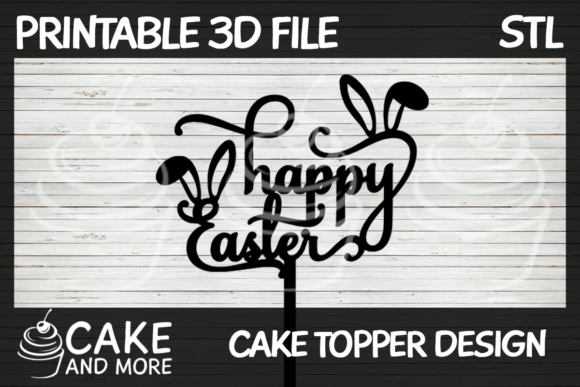
The intersection of digital fabrication and traditional holiday celebration has created new opportunities for personalized decor. Among the most versatile assets in this space is the Happy Easter Bunny Ears Topper, a digital design that bridges the gap between professional baking aesthetics and home-based 3D printing. This specific STL file serves as more than just a decoration; it represents a shift toward customizable, on-demand manufacturing for seasonal events. Understanding how to effectively utilize this digital asset requires knowledge of material selection, printing parameters, and food safety protocols, ensuring the final product is both visually stunning and safe for culinary environments.
Technical Considerations for Printing Edible-Adjacent Decor
When producing a cake topper intended for use with food, the primary concern is always safety. While the Happy Easter Bunny Ears Cake Topper – STL File for 3D Printing is designed as an adorable spring holiday decoration, the physical realization of this file demands strict adherence to hygiene standards. Most consumer-grade 3D printers utilize FDM (Fused Deposition Modeling) technology, which creates microscopic layer lines that can harbor bacteria and moisture. Therefore, direct contact between raw printed plastic and edible surfaces should be avoided without proper mitigation strategies.
Professionals and hobbyists alike should consider using food-safe barrier methods. Inserting the topper into a dedicated acrylic base or wrapping the stem portion in food-grade wax paper or plastic wrap creates a necessary separation. Alternatively, coating the finished print in a certified food-safe epoxy resin seals the layer lines and creates a non-porous surface. For those using resin printers, it is critical to note that standard UV resin is toxic and not food-safe. Only specialized, biocompatible resins that have been properly cured and post-processed should ever be considered for items near food, though FDM with PLA remains the industry standard for decorative toppers due to its ease of use and lower toxicity profile during printing.
Material Selection and Aesthetic Performance
The choice of filament significantly impacts the visual outcome of the Happy Easter Bunny Ears Topper. Polylactic Acid (PLA) is generally preferred for this application because of its low warping tendency and wide color availability. For a festive spring aesthetic, pastel-colored PLA filaments can eliminate the need for post-processing painting, reducing the risk of chemical contamination. Matte PLA variants are particularly effective for script fonts, as they diffuse light and reduce the shiny, plastic-like appearance that can sometimes detract from the elegance of cake decoration.
Silk or dual-color filaments offer another dimension of customization. The playful script font adorned with whimsical bunny ears benefits from the color-shifting properties of silk PLA, which can catch ambient lighting during brunches or evening gatherings. However, users must be aware that silk additives can sometimes weaken layer adhesion. Adjusting print temperatures slightly higher than standard PLA settings may be necessary to ensure structural integrity, especially for the thin connecting points of the script lettering.
Optimizing Slicer Settings for Script Typography
Digital designs featuring cursive or script typography present unique challenges in additive manufacturing. The Happy Easter Bunny Ears Cake Topper relies on continuous flow and delicate bridges to maintain readability and charm. Standard slicing profiles often fail to capture the nuance of these organic shapes. Successful fabrication requires specific adjustments to ensure the text is legible and the bunny ears retain their definition.
- Nozzle Diameter: While 0.4mm nozzles are standard, switching to a 0.25mm or 0.3mm nozzle can dramatically improve the resolution of small serif details and tight curves in the script font. This allows for sharper edges and better definition of the bunny ear contours.
- Perimeter Count: Increasing wall loops to three or four provides essential rigidity. Script letters often have varying thicknesses; additional walls prevent the top layers from sagging over sparse infill and create a smoother outer surface that requires less sanding.
- Print Speed: Reducing outer wall speed to 20-30mm/s minimizes vibration artifacts. Ghosting or ringing marks on curved letters can make the script look jagged. Slower speeds allow the cooling fan to solidify each segment before the next begins, preserving the whimsical flow of the design.
- Support Strategy: If the bunny ears extend at steep angles, tree supports or organic supports are superior to standard linear supports. They contact the model at fewer points, leaving minimal scarring on the visible front face of the topper. Placing the support interface distance slightly higher (0.1mm - 0.2mm) facilitates easier removal without damaging the delicate script.
Post-Processing Techniques for Professional Results
Achieving a bakery-quality finish with a DIY-printed Happy Easter Bunny Ears Topper often involves post-processing. Even with optimal slicer settings, layer lines may remain visible on vertical surfaces. Chemical smoothing is a viable option for certain materials; however, mechanical finishing is safer for food-adjacent items. Fine-grit sandpaper (starting at 400 and moving to 1000+) can smooth the stem and back faces. For the front face, where sanding might distort fine details, a heat gun passed quickly over the surface can lightly melt the outer layer, fusing ridges together. This technique requires practice to avoid melting the thin script but yields a glossy, injection-molded appearance.
Color enhancement is another avenue for customization. If printing in white or neutral tones, acrylic paints can be applied to the non-food-contact areas. Using a fine detail brush, creators can add shading to the bunny ears or highlight the script with metallic gold or silver accents. Sealing painted surfaces with a clear, non-toxic varnish protects the artwork from humidity and handling during events. This level of customization transforms a generic digital file into a bespoke centerpiece that matches specific party themes or table settings.
Applications Beyond Traditional Cake Decoration
While marketed primarily as a cake topper, the utility of this STL file extends to various aspects of event styling and education. The versatility of the Happy Easter Bunny Ears Cake Topper – STL File for 3D Printing – Adorable Spring Holiday Decoration makes it a valuable asset for multiple user groups.
Event Styling and Photography: Professional photographers and event planners utilize these toppers as props for flat-lay photography and dessert table vignettes. The dimensional nature of 3D printed objects adds depth to images that flat paper toppers cannot achieve. Because the file is digital, multiple copies can be printed at different scales to create visual hierarchy across a buffet line, maintaining thematic consistency without repetitive monotony.
Educational Contexts: Educators and STEM coordinators find value in this design as a teaching tool. The combination of typography and organic modeling introduces students to complex geometry and bridging concepts. Printing a functional object for a school Easter event demonstrates the practical application of CAD and manufacturing skills. Students learn about tolerance, material science, and design constraints in a context that feels celebratory rather than clinical.
Small Business Inventory: For bakers and cottage food operators, owning the STL file allows for rapid inventory adaptation. Unlike pre-manufactured toppers that require shipping time and minimum order quantities, digital files enable just-in-time production. A baker can offer personalized color matching or scale adjustments as premium services, differentiating their offerings in a competitive market. The ability to reprint immediately if a piece breaks also reduces waste and stress during peak holiday seasons.
Design Customization and File Modification
One of the distinct advantages of working with STL files is the potential for modification. While the Happy Easter Bunny Ears Topper comes as a complete design, users with basic CAD skills can adapt the model for specific needs. Software like Tinkercad or Fusion 360 allows users to import the STL and modify the stem length to fit taller tiered cakes or shorter cupcakes. Some creators choose to hollow out the stem to accommodate LED tea lights, transforming the topper into an illuminated centerpiece for evening receptions.
Scaling the model requires careful consideration of structural limits. Enlarging the topper by 150% may necessitate increasing wall thickness and infill density to prevent the script from snapping under its own weight. Conversely, scaling down for mini-desserts may require simplifying geometry, as extremely thin features might not extrude reliably. Testing scaled versions with draft-quality prints saves material and time before committing to the final high-resolution production run. This iterative process ensures the adorable spring holiday decoration performs flawlessly regardless of the specific culinary canvas it adorns.
Understanding the technical and creative dimensions of this digital product elevates it from a simple novelty to a sophisticated tool for celebration. Whether used by a home enthusiast preparing for a family brunch or a professional stylist curating a spring campaign, the successful implementation of this design relies on respecting both the capabilities of 3D printing technology and the requirements of food-centric environments. By mastering material choices, printer calibration, and safety protocols, users can fully realize the charm and functionality embedded within the STL file.